Historical Gaming

A modern reproduction of the Royal Game of UR

Original
The Royal Game of UR is probably our planets oldest recorded board game.
It was ''discovered in 1926-1927 by Sir Leonard Woolley in royal tombs in what is now Iraq -- dating back to more than 2500 B.C.E. '' (Online, http://www.ccgs.com/games/index.htm?sess=d54f13f4d29df14de88ea2a8a6f6bf66) It works by chance, using pyramid dice, with a possible 4 sides, allowing the player to move towards the goal. The whole thing, most likely, is comprised of wood.
This shows the concept for games such as Snakes and Ladders, later I would assume using square dice for more options. It is of course a chain reaction of inspiration since then, as we've developed as a society, so too have the games we play. Games are a natural concept for humanity as they help teach us various things about our reality and over all aid in our development. Even a parent playing Peek-a-boo with their baby is a lesson that just because something is hidden does not mean it is not there, or just because someone leaves does not mean they will not return. Things like that.
The whole dice idea has sparked off operation for many of games (except Operation <<), including casino games, and even the game which perhaps inspired monopoly.

The Landlord's Game
We all know Monopoly, that weird game with the random characters (such as the famous dog and shoe) who essentially carry out elitist tactics to build up their financial dominance. Monopoly is a pretty old game, and has even expanded to special editions such as Pokemon Monopoly, and even the Isle of Man!
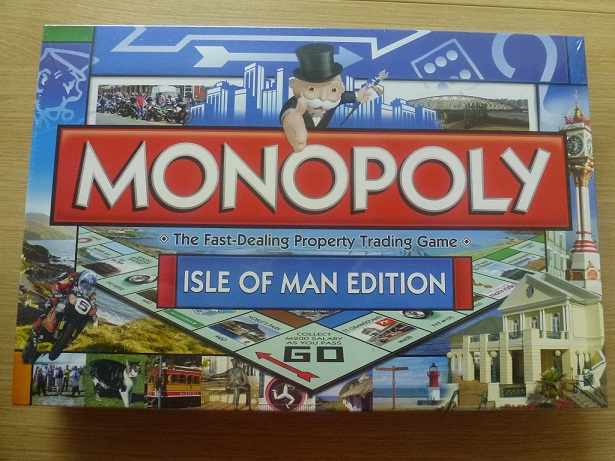
However, the concept of Monopoly was invented much earlier than 1933.
''In 1903, a Maryland actress named Lizzie Magie created a proto-Monopoly as a tool for teaching the philosophy of Henry George'' Henry George being an economical freedom fighter in the 19th century who suggested private ownership is natural resources causes unjust inequality in society, which to be fair, is exactly what we seem to be dealing with out current politics. This world is run by money, perpetuated by a greedy few whom exacerbated this dominance over regular folks. In other words, all governments and industrial corporation are in the pockets of the banks and those who earn profit from all of its down falls.
''Magie called her invention The Landlord’s Game, and when it was released in 1906 it looked remarkably similar to what we know today as Monopoly.''
All rules and play styles were pretty much exactly what Hasbro's Monopoly works by, with one alternative.
''The players could, however, vote to do something not officially allowed in Monopoly: cooperate. Under this alternative rule set, they would pay land rent not to a property’s title holder but into a common pot—the rent effectively socialized so that, as Magie later wrote, “Prosperity is achieved.” This, I suppose, is where the unwritten rule people often use in Monopoly comes from. In Monopoly, ''when a player pays out cash as a result of a Chance or Community Chest card, the money is put into the center of the board. Then, when somebody lands on Free Parking, they get to take all the cash that's accumulated up to that point.''
(website, http://www.straightdope.com/columns/read/454/what-is-supposed-to-happen-when-you-land-on-free-parking-in-monopoly)
It adds an element of equal opportunity and sharing of wealth which can leave the game lasting for hours.
This play through of the NES version of Monopoly by Game Grumps explains how the rule is fake.
To sum it up, Elizabeth Magie thought of a game concept with the intention of teaching equality, then Hasbro took that concept, changed its ideals, and now it spreads a message polar opposite to what Magie originally intended. It's like the people who disagree with Henry Geordie's philosophy literally vandalized Magies game, drawing big old dicks all over her work.
The game itself, however, looks as if it was made using cardboard with plastic dice, paper money and metal pieces. The characters used in the contemporary Monopoly we all now today where based off pieces used in a baking product called The Favourite Cake Sets. The pieces used have some sentimental significance to Charles Darrow, creator of Hasbros Monopoly.
Moving on.
It's hard to find board games that have a moral choice theme as most games were made for mind development and entertainment. Most games have tactics such as Chess and card games, but very few have something which show moral consequence. Here is one you could argue has a moral dilemma.
Ouija Board
The Ouija Board is a game with a questionable history. Some believe it was used in ancient cultures such as in China, Rome and Greece, and date it origin back to sometime 540 B.C. This is however, unproven.
The concept of Ouijia Board is a very broad one and can be confused with other methods of fortune telling or paranormal communication tools. The game is most recorded in the 1800's when people would use the board to contact the dead, but quite often use simply as entertainment or as an excuse to flirt with their potential partner.

Users would play very close to each other for no real reason other than to get some sexy knee action.
Why it couldn't just be played on a table or the floor would be explained using theories of being connected to each other when player, being in the aura of each other, that sort of thing. However everyone used it for these reasons, it was done like this in some fortune telling outlets, but its reasons for being played at home were more social. Sleep overs, house parties, these sort of things.
Spiritualists have always believed in some for of supernatural communication, and this is just another method of doing that. There is a logical explanation for the works of this board which I will get to later, but first lets check out more about the history of it.
In 1848 Hydesville, New York, Kate and Margret Fox allegedly contacted the spirit of a dead Peddler, this gained quite a lot of attention and sparked off a national obsession which transformed into modern Spiritualism in the US and Europe. People were coming up with all sorts of different methods to contact the dead, and the current method of Ouija Board then was known as Turning Table (seen in image above).
''The medium and attending sitters would rest their fingers lightly on a table and wait for spiritual contact. Soon, the table would tilt and move, and knock on the floor to letters called from the alphabet. Entire messages from the spirits were spelled out in this way.''
(Website, http://www.museumoftalkingboards.com/history.html)
However this method became to tedious for regular people to endure, the process took to long and players/customers were getting bored half way through the readings. It was later switched to an alphabetic method which people found much more simple to understand.
The method is this: I have on the table painted the letters of the alphabet, thus: On this table we place a polished little rod, rounded below and pointed on both ends; The upper side is wide for the fingers to rest, and also rough so they do not glide off. The table of course must be very smooth—I facilitate operations by putting a little powdered soap-stone on it. On this rod the fingers of the two persons sitting on the opposite sides are placed, and the rod is allowed to glide from letter to letter. With this little arrangement we receive messages now faster than by writing. If you think this information useful, your readers are welcome to it. Fraternally yours. LK —American Spiritualist Magazine, December 18, 1876.

The concept has became so popular, that it lead to the idea of corporate distribution by The Kennard Novelty Company in the nineteenth century.
''the “Ouija” was thoroughly tested and the above facts demonstrated at the United States patent office before the patent was allowed. For sale by all first-class Toy Dealers and Stationers. Manufactured by The Kennard Novelty Company, 220 South Charles street, Baltimore, Md. -Baltimore Sun, December 6, 1890''After Kennard left the company, Fuld changed the meaning of Ouija for the French and German words for "yes". In 1927 William Flud fell to his death from trying to replace the flagpole atop him factory in Baltimore. After his death his children took over the company and released various Ouija board of their own. In 1966 they retired and sold the business to the Parker Brothers who retain trademark for Ouija boards today. Parker Brothers are currently owned by Hasbro.

Though there is no actual choice making in this game, the moral dilemma, I'd say, comes from ones understanding of this paranormal concept and still deciding to play it. It's fun to get a bit of a fright which is why the game is so popular, however believers will explain how these spirits should not be disturbed, yet people still choose to provoke them with slumber party questionnaires.
The game is traditionally made with cardboard and a wooden piece fitted with a glass in the centre to see the letters it covers on the board. However I'm afraid science can once again ruin all the fun.
When people play Ouija board they will feel the piece moving on its own accord without them using any force or thought to move it round the table. The answers will often be a reasuring message or something to give the player a fright, however it's not a ghost moving the piece. The piece is being moved subtly by the player, unaware to them, due to a phenomenon called the ideomotor effect. This is a condition is motivated by the subconscious mind, allowing for subtle movements unknown to the conscious mind.
In other words, your mind expects something to happen so you subconsciously make it happen.
If you're trying to contact a dead relative you will expect them to say things that reasure you, or depending on your perception, possibly frighten you. When contacting unknown spirts you most likely expect them to be ''evil'' or abstract.
History has always had some form of gaming, play is in our nature and learning is a part of play.
We use play for education, development, and exploring parts of our world and mind that we want more understanding of. It is used for all sorts of reasons, but mostly just to have fun, which everybody requires :)
Bibliography:
History/Board Games, etc>
http://www.ccgs.com/games/index.htm?sess=d54f13f4d29df14de88ea2a8a6f6bf66
http://archive.archaeology.org/0003/abstracts/museum.html
http://www.ccgs.com/games/ur.htm
http://www.britishmuseum.org/explore/highlights/highlight_objects/me/t/the_royal_game_of_ur.aspx
Monopoly>
http://www.hasbro.com/monopoly/en_US/discover/about.cfm
http://www.henrygeorge.org/dodson_on_monopoly.htm
http://landlordsgame.info/
http://inventors.about.com/library/inventors/bllandlordgame.htm
http://harpers.org/blog/2012/10/monopoly-is-theft/
http://schalkenbach.org/rsf-1/henry-george/who-was-henry-george/
http://think-left.org/2013/08/21/monopoly-and-the-landlords-game/
https://www.youtube.com/watch?v=i6aXSY0TqlY
http://www.straightdope.com/columns/read/454/what-is-supposed-to-happen-when-you-land-on-free-parking-in-monopoly
https://www.youtube.com/watch?v=zE5zNI2_d2s
http://coolmaterial.com/feature/the-story-behind-monopoly-pieces/
http://think-left.org/2013/08/21/monopoly-and-the-landlords-game/
https://www.youtube.com/watch?v=i6aXSY0TqlY
Ouija Board>
http://www.hauntedbay.com/history/ouija.shtml
http://www.museumoftalkingboards.com/
http://www.hasbro.com/shop/details.cfm?R=8F00D4B0-6D40-1014-8BF0-9EFBF894F9D4:en_US
http://www.museumoftalkingboards.com/interact.html
https://www.youtube.com/watch?v=221lInw7Wj0
https://www.youtube.com/watch?v=D4QOzi7_FUE
https://www.youtube.com/watch?v=Vhre44WZ4eU
https://www.youtube.com/watch?v=8TyFxAtu6a8
https://www.youtube.com/watch?v=eG4wTZuT3wM
Book - http://www.amazon.com/Encyclopaedia-Occultism-Dover-Occult/dp/0486426130
http://mentalfloss.com/article/12952/brief-history-ouija-board
http://www.museumoftalkingboards.com/ancient.html
http://www.museumoftalkingboards.com/WebOuija.html
http://www.skepdic.com/ideomotor.html
http://www.rawstory.com/rs/2013/04/27/ideomotor-effect-the-driving-force-behind-ouija-boards-and-fake-bomb-detectors/
http://www.critical-thinking.org.uk/psychology/the-ideomotor-effect.php
http://www.museumoftalkingboards.com/history.html
Slender Man>
http://www.parsecproductions.net/
http://blueislestudios.com/contact-us/
http://knowyourmeme.com/memes/slender-man
http://urbanlegends.about.com/od/horrors/a/The-Slender-Man.htm
http://download.cnet.com/windows/3055-20416_4-75764181.html?&tag=pdl-redir
https://www.youtube.com/watch?v=-2FBwBBpgQ8
https://www.youtube.com/watch?v=R0RNkkd2peE
https://www.youtube.com/watch?v=zUjZG294KG0
https://www.youtube.com/watch?v=8ppyyqev1NY - part 1

No comments:
Post a Comment